Showing posts with label Fashion. Show all posts

01 April 2019

Thermally Responsive Fabric

Never mind cotton. Forget wool. Skip those high-tech, wicking polyesters. Have I got a fabric for you. Well, I don’t, but researchers from the University of Maryland do.

Welcome back. I thought you’d be interested to learn about this new fabric, even if it’s not quite ready for market. In short, the fabric is thermally responsive. It automatically responds to the temperature and humidity of our skin to either release or trap heat.

I could stop there, but I’ll continue for those in disbelief or who just want to learn more. Since the fabric’s ability to regulate the heat exchange is tied to infrared radiation, I’ll start there.

Infrared Radiation and Our Bodies
In a blog post several years ago, I illustrated the use of thermal sensing in medical imaging (Thermal Body Mapping Addendum).

Thermal images, where colors correspond to temperature differences, have been used to assess the effects of stress on hands of patients with different medical conditions or injuries (from iopscience.iop.org/0967-3334/33/3/R33/article).
As I wrote at the time, thermal imaging should at least be of value where dissipation of heat through the skin is diagnostic. Here’s what that was all about.

Photographic cameras collect radiation that we see. Thermal sensors collect radiation in the infrared (IR) region, which is beyond the sensitivity of our eyes. IR radiation covers a broad spectrum of wavelengths. Thermal sensors normally collect IR radiation at longer wavelengths, where the level of radiation is related to the temperature of the object sensed. In general, the hotter the object, the more IR radiation it emits.

The principal way our bodies lose (emit) and gain (absorb) heat is through IR radiation, and our skin is a very efficient emitter and absorber of IR radiation. If we’re cold, we add clothes to reduce the transmission of IR radiation; if we’re warm, we remove clothes to promote the transmission of IR radiation. The newly developed fabric does both.

How the Fabric Works
For the new fabric, the researchers took fibers of two different synthetic components, one that absorbs water, the other that repels it. They coated the fibers with a thin layer of carbon nanotubes (lightweight, carbon-based, conductive metal).

Because the coated fibers both absorb and repel water, the fabric warps when exposed to humidity such as from a sweating body. That distortion opens pores in the fabric, allowing heat to escape.

Of greater consequence, the distortion brings the coated fibers closer together. That modifies the electromagnetic coupling between neighboring fibers, changing the way the fabric interacts with IR radiation. Depending on the tuning, the fabric will either allow IR radiation to pass or block it almost instantaneously. 

Thermally responsive fabric (photo by Faye Levine from today.umd.edu/articles/hot-and-cold-comfort-a77c4599-3bb4-4efd-83d2-79ac418ad018).
Wrap Up
The researchers report that the new fabric effectively modulated the IR radiation by over 35% as the relative humidity of the underlying skin changed.

They note that, while more work is required before we’ll see clothes of the new fabric, the materials are readily available. The carbon nanotube coating can be added easily during the dyeing process. And yes, the fabric can be knitted, dyed and washed like other sportswear fabrics. So, get ready.

Thanks for stopping by.

P.S.
Study of new fabric in Science: science.sciencemag.org/content/363/6427/619
Example articles on study:
www.newscientist.com/article/2193057-heat-sensitive-fabric-cools-you-on-hot-days-and-warms-you-in-the-cold/
www.sciencedaily.com/releases/2019/02/190207142242.htm
www.apparelnews.net/news/2019/feb/21/university-maryland-researchers-create-fabric-envi/
Example article on infrared radiation and our bodies: www.health.belgium.be/en/interaction-between-radiation-and-human-body

A version of this blog post appeared earlier on www.warrensnotice.com.

02 June 2015

Button-Down Collar Addendum

If you search online to learn why the top bed sheet should be placed face down when making the bed, your hunt will be quick and easy. As noted in last Friday’s blog post, Deferred Guidance, you’ll find numerous sites offering more or less the same information. That’s not always the case of course. Take men’s fashion or just shirts.

Button-Down Collar Shirts

Cary Grant in button-down collar shirt and suit in the 1946 movie, Notorius. (manlawmondays.com/category/style/page/2/)
Working in academia, I normally wore button-down collar (BDC) shirts with a tie, often with a sweater and occasionally with a blazer or sport coat. Later, working in government, I wore a sport coat or suit every day and continued to wear BDC shirts.

Suddenly a sartorial alert sounded: BDC shirts should not be worn with suits!

Frank Sinatra in button-down collar shirt and suit in the 1960 movie, Ocean’s Eleven. (bamfstyle.com/tag/danny-ocean/)
I could never be mistaken for a fashion pate, yet I rushed to the Internet to learn if I was indeed breaking the rule. Although Wikipedia is now available to offer details I wasn’t seeking at the time--BDCs were introduced by Brooks Brothers in 1896, patterned after shirts used by English polo players, used only for sports shirts in the U.S. until the 1950s–every relevant website I happened upon concurred with the alert. 
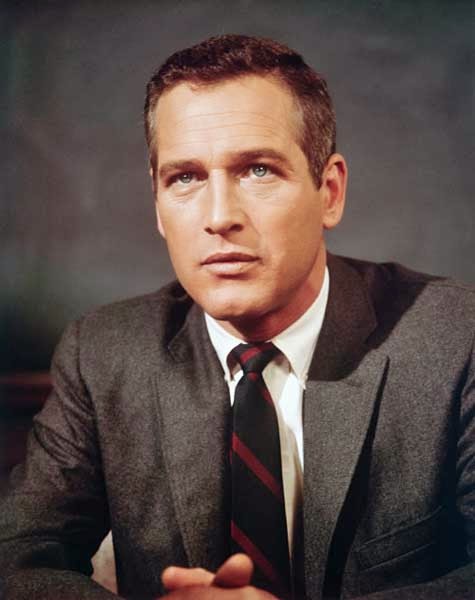
Paul Newman in button-down collar shirt and suit in the1966 movie, Torn Curtain. (This might be excused as he was playing a scientist.) (putthison.com/post/48137518229/q-answer-can-i-wear-a-button-down-collar-shirt)
Changing Fashions
 

If I search now, however, the online advice goes either way. Most sites still discourage wearing BDC shirts with more formal suits; but the traditional style has been changing since the mid-20th century, especially in the U.S., the home of the BDC shirt. 
Gianni Agnelli was an Italian industrialist, principal shareholder of Fiat and fashion icon. Here, he wore a button-down collar shirt, tie and suit, with the collar buttons unbuttoned. (www.gentlemansgazette.com/gianni-agnelli-style-gentleman/)

That’s not to say that some of the more elegant among us haven’t always defied tradition. Fred Astaire reportedly wore BDC shirts with double-breasted suits. Before my awakening, I probably would have too. Fortunately, I never owned one of those suits. It has nothing to do with my dancing.

P.S.

Button-down collar shirt background from Wikipedia and Wall Street Journal:
en.wikipedia.org/wiki/Dress_shirt
en.wikipedia.org/wiki/Brooks_Brothers
www.wsj.com/article_email/SB10001424127887324468104578250150034142598-lMyQjAxMTAzMDIwNDEyNDQyWj.html?mod=wsj_valettop_email
Example website that says it’s ok to wear BDC shirts with suits: www.thefineyounggentleman.com/america-fuk-yeah/a-button-down-collar-with-a-suit/
Example website that says never wear BDC shirts with suits:
www.josbank.com/menswear/shop/ContentView?storeId=11001&catalogId=10050&contentKey=SHIRTDETAILS
Example websites that discourage wearing BDC shirts with more formal suits:
www.realmenrealstyle.com/understanding-mens-button-down-collar/
www.gq.com/style/style-guy/shirts-and-ties/200105/button-down-collars-suits
putthison.com/post/48137518229/q-answer-can-i-wear-a-button-down-collar-shirt
GQ interview with Fred Astaire:
www.gq.com/entertainment/celebrities/195708/fred-astaire-gq-interview-style-fashion

20 March 2012

Hat Photo Addendum

I found a few more family photos to complement last Friday’s blog post, Hat Fashion and Etiquette.

One of Warren's aunts (R) and a friend in the hats of the day, ca. 1920s.
Warren's father, aunts and grandfather (bowtie), ca. 1920.
Warren's wife with kittens. The hat may be old but the photo can't be.

16 March 2012

Hat Fashion and Etiquette

Warren’s son wearing a baseball
 cap backwards. (Note hat hanging
on wall for white-hat days.)
Welcome back. I’ve been thinking about hats. Not because I’m growing bald. Not because I can’t figure why young men and boys wear baseball caps backwards. And not because I saw clips from a Country Music Award show and wondered why men in the audience didn’t remove their Stetsons.
 
Nope, my thoughts are more akin to the TV news(?) reports of hats worn to the royal wedding.

My Grandmother’s Hat 

It all started when I was searching for old photographs to be shown to my aunt at her 98th birthday celebration. Although I was after photos of my aunt, who was and still is a knock out (i.e., beautiful), I came across a photo of my aunt’s mother, my grandmother.

Warren’s grandmother (R) and 
her sister-in-law, in hats in
fashion, early 1900s.
The photo was taken in Germany, I believe, and my grandmother was posing with her sister-in-law. Both were wearing incredibly large hats--much bigger than royal wedding or cowboy hats or most of Lady Gaga’s hats. (OK, the last is a guess. I’ve only seen two.)

Hat Etiquette
 
I alluded to hat etiquette, so I’d better say more. In this election year, I vote No to men, including my son, wearing hats indoors, public spaces excepted. 
 
I realize etiquette has gotten saggy in recent decades, but after a quick and biased online survey, I learned that the propriety of wearing hats indoors hasn’t changed since I was young. Most encouraging, I’m not alone in my vote, and the voters don’t all seem to be nursing home residents.
 
I won’t touch women’s hat etiquette. On one hand, can you imagine sitting behind my grandmother at a concert, even a country music concert? On the other hand, can you imagine the difficulty of her removing and re-donning that hat? That ain’t your mama’s cowboy hat.
 
My Hats in Puerto Rico
 
Warren in the same hat on a field 
 project in the U.S. and on 
vacation in Puerto Rico,  
awaiting a bus.
Don’t get me wrong; I like hats. Take the hats I wore in Puerto Rico.

On our family vacation, which wasn’t that long ago, I wore the hat I’d worn during government field projects.

Working at the Arecibo Observatory, which was long ago, I wore a hardhat if I was on or below the antenna platform.
 
Warren and co-worker in hardhats 
under the Arecibo Observatory
 reflector, below the platform, 1965.
Mapping soils on the south side of the island, I wore a straw cowboy hat in the field. I stayed in the City of Ponce that summer, and in those long-ago days, Ponce struck me as a bit different from the rest of the island.

What do I mean “different”? How about being refused entry to a movie theater? The young woman in the box office just pointed to a sign: “No Mahones,” which translates to “No Jeans.” “You’re kidding!” I protested. “It’s dark in there, my jeans are clean and who cares?”

Worse, I was almost refused entry to the hotel apartment I was renting. Returning from the field wearing cowboy hat and mahones, I encountered the building owner, whom I’d never met nor seen or vice versa.

As I approached the elevator, he motioned for me to leave the building. When I ignored him, sure that he was waving at someone else, he shouted angrily in Spanish, which I didn’t yet understand—not that I would have ever learned those words anyways. The fellow managing the front desk finally interceded. 

Wrap Up

Let that be a lesson to you. My building-owner incident would probably not have occurred if I'd removed my hat. Still, I wish I'd been that when his grandchildren started wearing their baseball caps backwards and indoors.

Thanks for stopping by. I’ll try to find more hats for Tuesday’s photo addendum, and I’ll write again next Friday.